

You may be interested in…
Window Cleaning Equipment: A Guide for Commercial Operators
Window cleaning might look deceptively simple from the outside. But choosing the right equipment can make the difference between a flawless, streak-free finish and a frustrating redo. This is further complicated by the increasingly wide range of tools, pole systems, solutions and safety requirements on offer nowadays.
This blog is a comprehensive guide to lay out what commercial operators actually need to know.
Essential Tools in a Professional Window Cleaning Kit
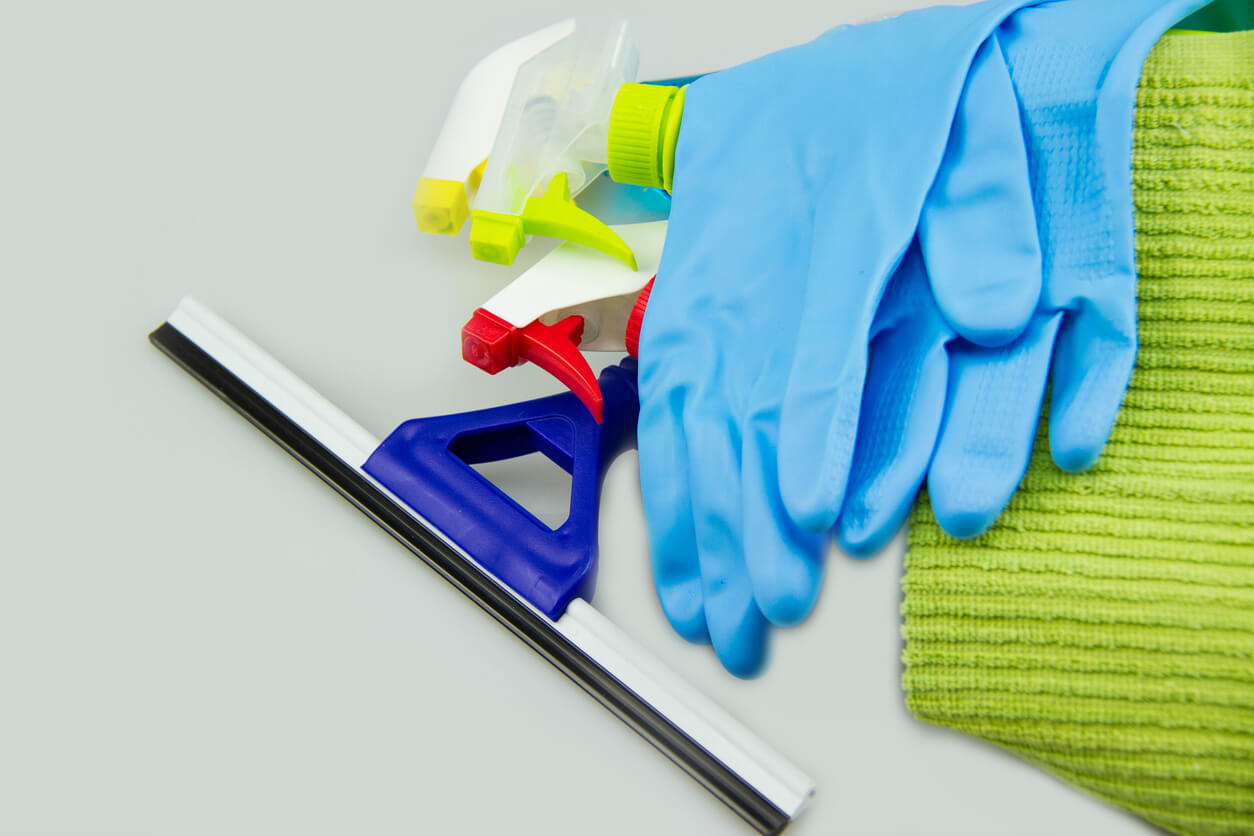
Typically, a professional window cleaning kit will include the following:
- Squeegees of multiple sizes, depending on the buildings in your rotation
- Scrubbers
- Towels
- A bucket
- An extension pole
A glass scraper is also worth including in a commercial kit, for removing dried-on paint, adhesive sticker residue, or any other caked-on debris.
Choosing the Right Squeegee Size and Rubber Type
For large, open windows, a longer squeegee (18 inches or more) allows you to cover more area with fewer passes, saving you significant time and effort. If you're working with smaller windows or French doors, on the other hand, a shorter squeegee (between 6 and 12 inches) provides greater control and precision.
As a general rule of thumb, your squeegee blade should be slightly narrower than the width of the windowpane. This allows you to smoothly pass over the windowpanes without bumping into side frames.
When it comes to rubber type, which one is best will largely depend on what type of windows you're cleaning. For cooler temperatures and uneven surfaces, soft rubber's pliability makes it the ideal choice. For warmer temperatures and flat, uniform surfaces, hard rubber's stiffer composition makes it the best option.
Of course, no type of rubber will work effectively forever. If you notice streaking, replace your rubber; more often than not, that will be the culprit.
Extension Poles and Reach: What You Need for Your Building
Here are some of the common options for extension poles, matched to building type.
Standard extension poles:
For heights under 6 metres (or around two storeys), aluminium poles are durable and affordable. For heights over 6 metres, carbon fibre or hybrid poles are strongly recommended – they're lighter than aluminium and will help reduce shoulder and back strain.
Water-fed pole (WFP) systems:
These pump purified water through a telescopic pole to a brush head, allowing multi-storey commercial buildings to be cleaned entirely from ground level. With the need for tall ladders eliminated, WFP systems greatly reduce health and safety risks. WFP systems can reach up to 5-6 storeys, making them suitable for most low-rise commercial buildings.
Glass Cleaning Solutions: What Works and What Doesn't
Let's look at some of the most common options for glass cleaning solutions, including professional concentrates, common additives, and what to avoid.
Professional concentrates are the standard for commercial work, as they're formulated to provide the right level of slip for a squeegee, to dry without residue, and to perform consistently across a range of glass types. They can be diluted with water to the desired strength and used in a bucket or spray bottle, making them the most common and versatile form of cleaning solution.
There are also DIY options that do have some merit. Dish soap in water is a widely used and cost-effective solution that provides good lubrication and rinses clean. However, it's not a good choice if you're cleaning windows in direct sunlight; sunlight will cause your solution to dry too quickly and pretty much guarantee streaks.
Safety Considerations When Cleaning at Height
Under the Work Health and Safety (WHS) Regulation 2017, work at height is defined as a principal hazard that requires specific risk controls. Here are some key rules of thumb to ensure you're compliant:
- WFP systems and telescopic tools should be used where possible to eliminate the need to work from height
- If working at height is unavoidable, and rope access is required, operators must hold IRATA certification
- For any high-risk work at height, a Safe Work Method Statement (SWMS) is mandatory: it sets out site-specific hazards, control measures and access points.
If you're after window cleaning equipment which will help you get the job done, while remaining compliant with regulations, browse our range of professional window cleaning equipment at Big Clean today.