

You may be interested in…

Cordless vs Corded Cleaning Equipment: Which Is Right for You?
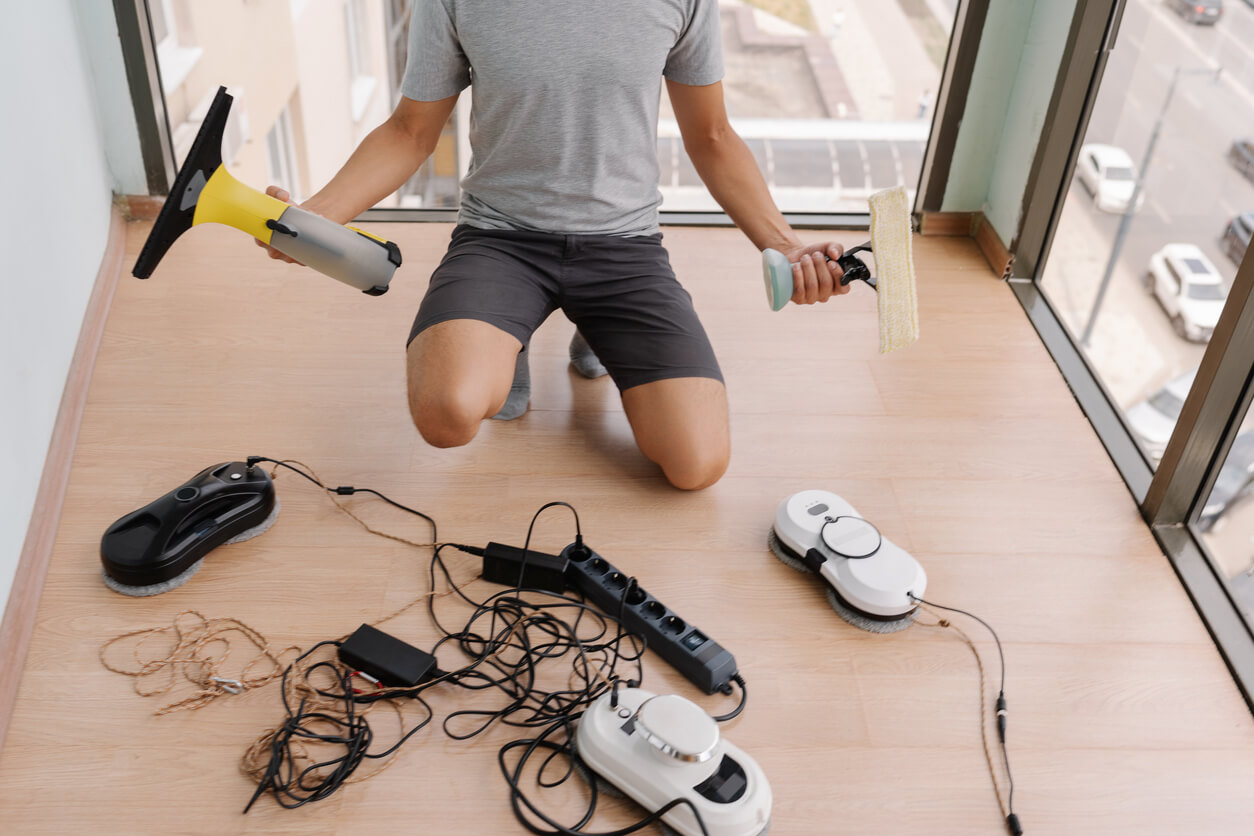
If you've spent many a cleaning shift with your equipment's cords trailing behind you as you hunt for the next power point, you might be wondering if it's finally time to go cordless. While battery-powered equipment has come a long way, corded equipment still holds its ground in many settings.
This blog will break down the pros and cons of each, to help you decide which is right for you – and make your next shift a breeze.
The Rise of Battery-Powered Commercial Equipment
Lithium-ion battery technology has improved dramatically in recent times, and along with it, cordless commercial vacuums and floor scrubbers have surged in popularity. Where previously they perhaps didn't perform as well, modern commercial 36V brushless and cordless vacuums now deliver fade-free suction power to rival their traditional 240V corded counterparts.
When they first hit the market, cordless models were a little notorious for being underpowered, with short-lived batteries. But now, with huge investment in commercial-grade cordless lines, they have shifted to professional-grade equipment trusted by cleaning companies, schools, and large retail facilities alike.
This transition is largely thanks to the lithium-ion battery; with high energy density, it can store large amounts of energy in a relatively small and lightweight package.
Comparing Runtime, Power and Charging Times
How do modern cordless models compare with their corded counterparts? Here's the rundown:
Runtime:
Cordless commercial vacuums are limited by their battery life. Runtimes can range from around 45 minutes to an hour on a full charge. Floor scrubbers also vary, typically ranging from 30 minutes to two hours.
Corded equipment, on the other hand, will run for as long as it's plugged in. If you have long shifts or a large surface area to cover, this poses a clear advantage.
Power:
Corded vacuums will maintain their full power output from start to finish, whereas cordless units may start out at full capacity but then gradually lose suction as their battery drains.
It's important to note, though, that this performance gap is narrowing fast, with the introduction of newer cordless models. These days, for most cleaning tasks in small-to-medium spaces, battery-powered equipment performs comparably.
Charging:
These days, slow charging times are a thing of the past; some models will now be fully charged in under two hours. To keep operations running smoothly, invest in spare packs of batteries; this way, you can get to work with a spare, charged battery, while your other battery charges up.
Where Cordless Equipment Excels (and Where It Falls Short)
There are many scenarios where cordless equipment comes out on top, and many scenarios where corded equipment emerges as the best option. Here's an overview of where cordless equipment wins, and where it doesn't.
Where cordless wins:
Active offices, clinics, or mixed-use facilities where cleaning happens alongside occupants – with no cord management, there's no need to locate and move between power points
Tight spaces, or spaces filled with furniture – battery-powered floor scrubbers can move freely around furniture, with no risk of tangling, tripping, or running out of cord length
Where corded still holds its own:
Large open spaces like hotels, hospitals, and big commercial buildings – you can clean for hours without interruption
Heavy-duty deep-cleaning tasks that need guaranteed consistent power – like thick carpet, embedded debris and industrial environments
Safety Benefits of Going Cord-Free
Trailing cords are a trip hazard in commercial environments, and if you're a commercial operator with Australian WHS (Work Health and Safety) obligations, this is a key consideration.
Alongside trip risks, cordless designs also reduce electrical safety risks associated with worn or damaged cables.
Cost Considerations: Upfront vs Long-Term Value
Looking purely at upfront cost, corded vacuums are typically less expensive than their battery-powered counterparts. However, cordless vacuum cleaners can offer a substantial ROI by enhancing cleaning efficiency and reducing labour costs (and potential accident-related expenses).
However, there is also a hidden cost: lithium-ion batteries will degrade over time, typically retaining around 80% of their original capacity after two to three years of regular use, and needing a full replacement after five years. Be sure to factor this into your total costs.
Shopping for some replacement cleaning equipment? Browse our full range at Big Clean today.