

You may be interested in…
Ergonomics in Cleaning for Preventing Injury Through Proper Techniques
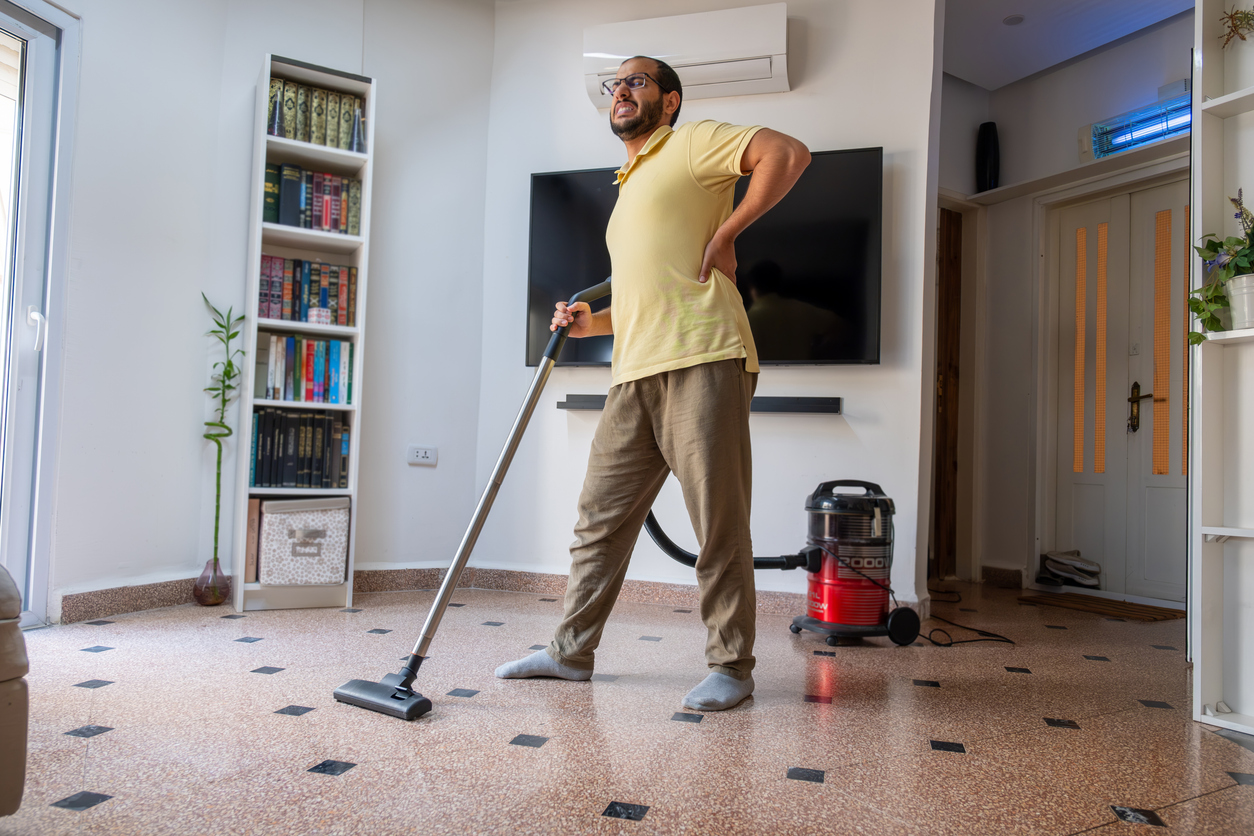
Cleaning can cause awkward postures and strain, resulting in long-term injuries. These problems can be avoided by practising safe techniques and using the appropriate equipment.
Understanding the Key Risks: Repetitive Strain Injuries (RSIs) and Back Pain
Back pain and repetitive strain injuries commonly result from incorrect cleaning techniques. These are caused by:
- Working with an unnatural posture that puts strain on joints and muscles.
- Repeating the same actions over long periods with insufficient rest.
- High physical effort that strains ligaments and muscles.
- Using unsuitable equipment with poor ergonomics.
- High stress and demands that increase tension.
- Inadequate recovery time for soft tissues.
These problems can be overcome by using proper equipment and techniques, providing adequate support and rest periods, and intervening early if issues occur.
Tool Selection: How Ergonomic Equipment Reduces Physical Strain
Ergonomic tools fit in better with the human body, avoid awkward postures and reduce physical strain. Using equipment with adjustable features, power assistance, a better grip and reduced vibration will lessen strain, increase comfort and efficiency, and reduce injuries.
Adjustable equipment will support a natural body position while power assistance decreases effort and reduces fatigue. A better grip will reduce effort from hands, and lower vibration protects muscles and joints. Ergonomic design needs to be tailored to individuals and will improve employee welfare and efficiency.
Mastering Safe Techniques for Lifting, Mopping, and Reaching
Safe techniques when cleaning will eliminate some hazards and avoid injury. When lifting, it is essential that the load is assessed and a stable position is adopted. Lifting should be as close to the load as possible, with knees bent rather than the back, and lifting smoothly with a firm grip and without twisting.
Safe mopping depends on using the correct equipment for the size of the area. A tall mop bucket will reduce bending, and the back should be kept straight, avoiding twisting or stretching.
Reaching increases injury risk, so it should be avoided by keeping items close. Keep shoulders level, avoid stretching and use a step ladder for high items rather than an unstable base.
The Power of Planning: Task Rotation and Scheduling Rest Periods
Planning and preparation make all tasks go more smoothly, and for cleaning, they can improve health and safety as well as productivity, job satisfaction and flexibility. They also help to satisfy an employer’s duty of care for workers.
Task rotation should take into account the physical and mental load of different tasks. By varying these tasks, body regions will be able to recover from the stress of particular actions.
Regular short rest periods are essential to enable workers to recover. A 10-15-minute break every hour may be necessary for strenuous tasks, with at least twelve hours between successive shifts and a minimum of two days off in every seven-day period.
Proper planning will enhance well-being and increase efficiency.
Proper Body Mechanics: Maintaining a Neutral Spine and Avoiding Twisting
The main aims are to avoid twisting when moving or lifting, maintaining the natural S-curve of the spine. This will reduce strain and help to avoid back injuries. To do this:
- Avoid rotating the torso.
- Keep loads close when lifting, place feet apart, bend at the knees and hips, keep the back straight and lift with the legs.
- Distribute weight evenly when standing, with shoulders back and chin level.
- Avoid jerky movements; instead, move smoothly.
- Don’t stay in one position for too long.
Proper posture when cleaning will avoid a lot of problems. Our product range has plenty of equipment that is designed to make tasks easier, so you can support your workers.