
You may be interested in…
Cleaning Strategies for Healthcare Facilities
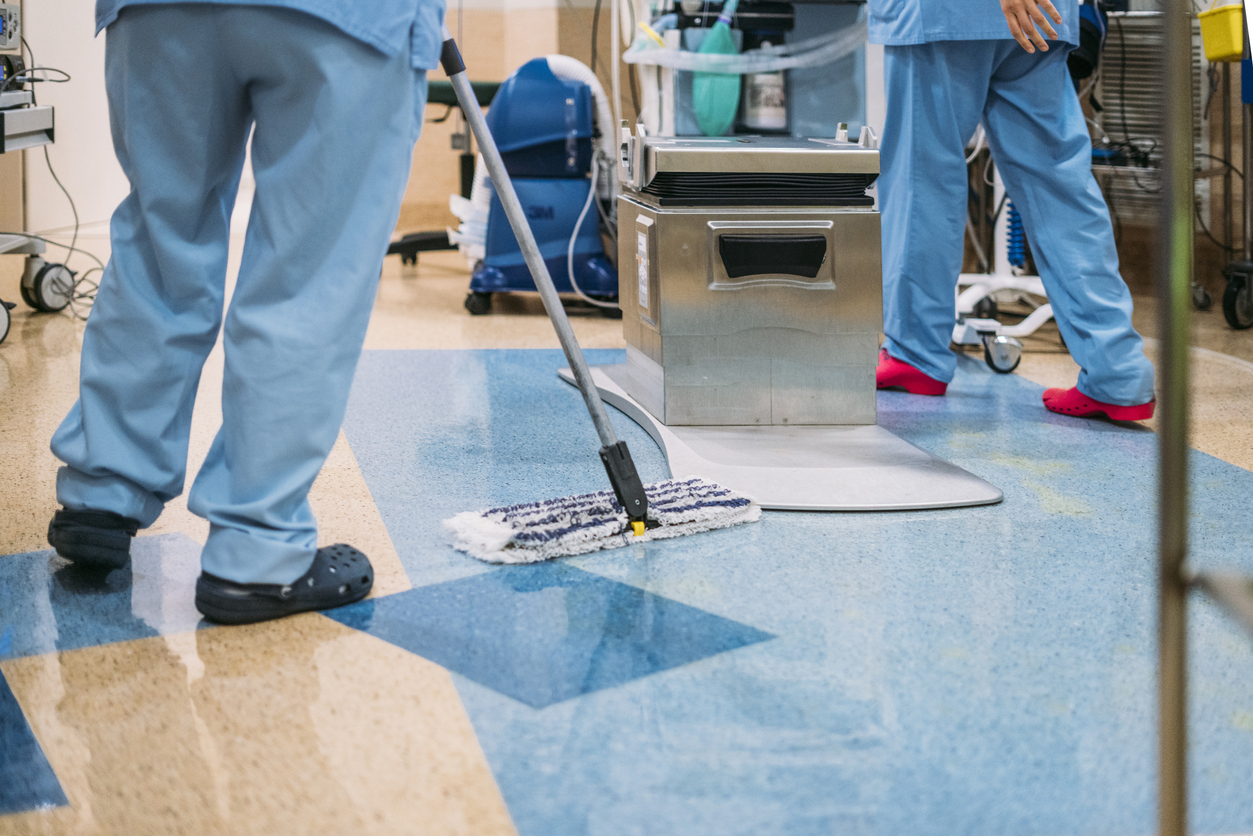
Healthcare facilities depend on stringent hygiene measures to keep everyone safe, especially those who are at a low ebb due to illness or injury. To achieve this, careful cleaning strategies are adopted to reduce risks and prevent contamination.
Differentiating Routine, Terminal, and Scheduled Cleaning Protocols
Different cleaning programmes for healthcare facilities are generally categorised by their frequency and what is involved for each type:
- Routine or scheduled cleaning is undertaken at regular intervals and is intended to maintain a clean environment. It focuses mainly on surfaces that are touched frequently, such as light switches, door handles and handrails, as well as floors and other surfaces. It is generally a one-step clean with mild detergent and is followed by disinfection.
- Terminal cleaning provides a deeper clean and disinfection, occurring when rooms become vacant due to a patient being discharged, transferred or dying. This involves a thorough and systematic cleaning and disinfection with the aim of eliminating pathogens and preventing contamination of the next patient.
Targeted Disinfection: Focusing on High-Touch Areas and Pathogen Control
Targeted disinfection is about prioritising areas where contamination is most likely or where users come into contact with most frequently. For healthcare, these areas include bedrails, privacy screens, light switches, bathroom fixtures, door handles and any shared equipment. Visitors will also come into contact with lift buttons and handrails.
Disinfection practices involve:
- Clean with soap and water to remove dirt and grease.
- Disinfecting with approved products that are effective against bacteria, viruses and mould.
- Ensuring the disinfectant stays wet on the surface long enough to kill pathogens.
- Using different coloured cloths on specific areas to prevent cross-contamination.
- Making sure all affected staff are familiar with the techniques.
Bacteria can spread quickly in a healthcare facility, so effective disinfection is essential.
Preventing Cross-Contamination Through Colour-Coding and Equipment Zoning
Cross-contamination is a real danger if the same equipment is used in different areas. To counteract this, a health facility is divided into zones ranging from high risk to low risk. These zones are assigned a colour and cleaning equipment, and PPE items are similarly colour-coded to identify what is used where.
Common colour coding is as follows:
- Red for high-risk areas.
- Blue for general use areas.
- Green where there is food preparation.
- Yellow for bathrooms and toilets.
- White is where the highest level of hygiene is necessary.
By assigning the different areas of risk and ensuring the correct materials and cleaning methods are used for them, hygiene levels are maintained, and regulations are complied with.
The Critical Role of Training and Compliance for Cleaning Staff
No matter what standards and methods are put in place, they will not be effective if staff are not familiar with them. So proper training of cleaning staff is essential to ensure:
- The effective use of cleaning methods and materials.
- Avoidance of spills, falls and exposure to chemicals.
- Reduction of waste due to improper use and errors.
- A consistent approach for high standards.
Proper documentation, effective training and supervision, and regular updates will ensure proper cleaning, compliance with regulations and reduced liability that result from comprehensive infection control.
Optimising Restroom Hygiene: Dispensers and Consumables
Restroom hygiene is heavily dependent on the use of consumables with controlled use and touch-free dispensers. These reduce the transmission of germs and include:
- Sensor-activated soap dispensers.
- Automatic paper towel dispensers that are touch-free.
- Hand sanitiser stations.
- Sanitary bins with touch-free mechanisms.
- Automated sanitisers for toilets and urinals.
- Air fresheners that operate at set intervals.
By having the right consumables available in a touch-free manner, high hygiene levels are ensured. Our broad product range will provide everything you need for effective infection control in healthcare facilities.